


Door 5 – nRF54LM20A
Expanding the nRF54L Series with a high-memory option
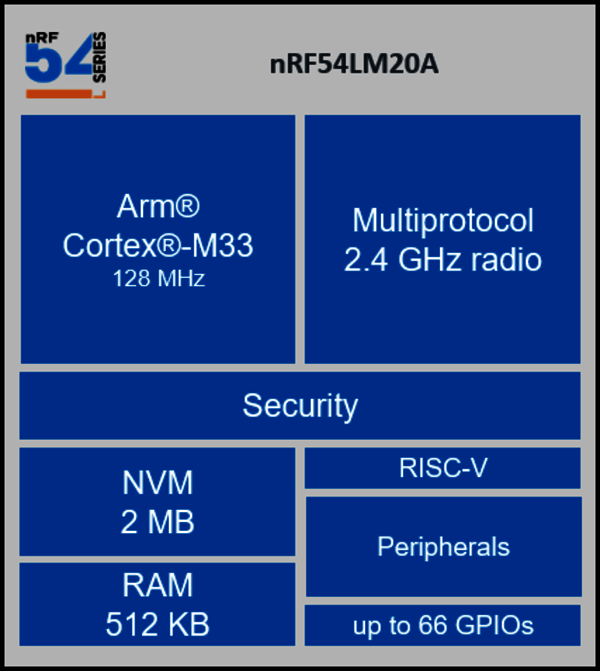
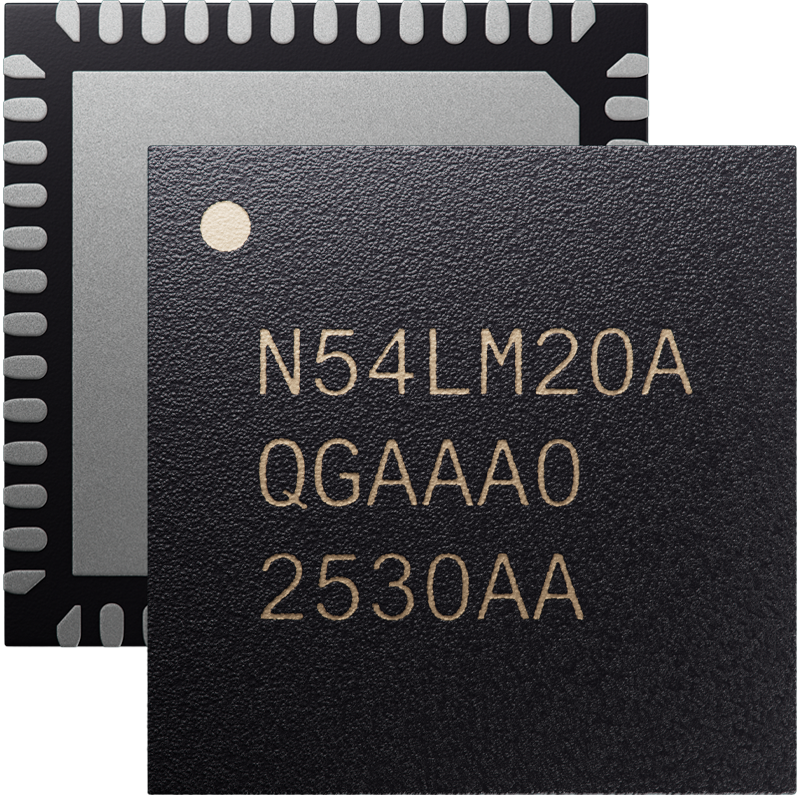
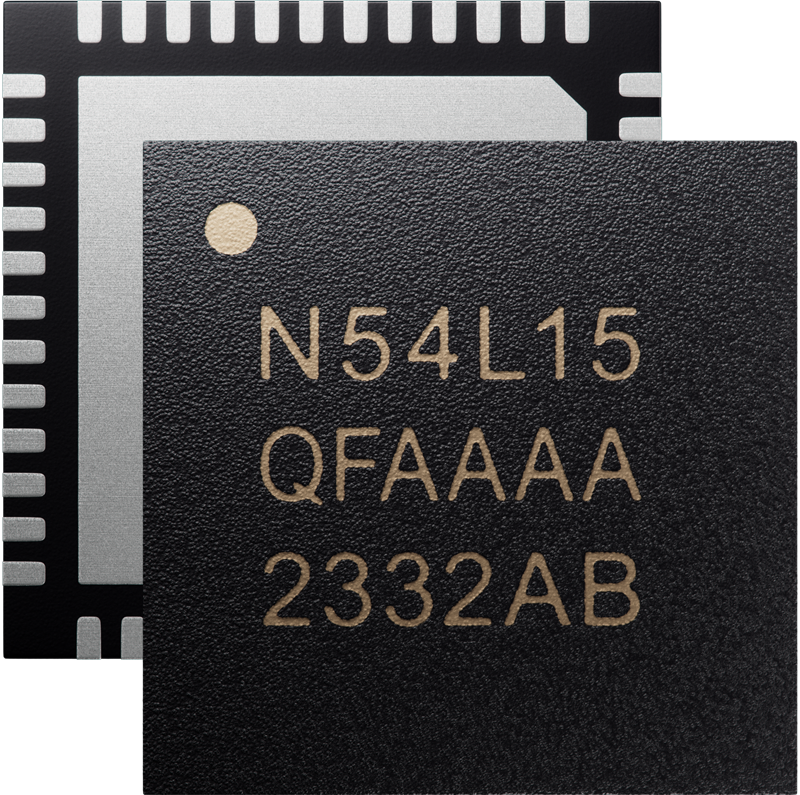
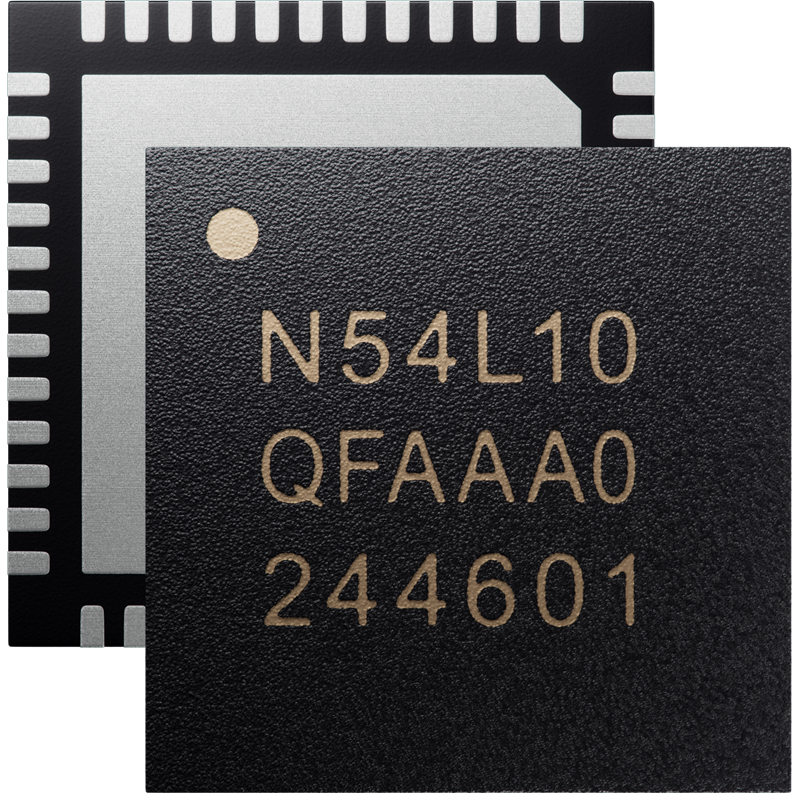
The nRF54LM20A is a next‑generation, ultra‑low‑power wireless System‑on‑Chip (SoC) in Nordic’s nRF54L Series. Launched in September 2025, the nRF54LM20A is one of the latest nRF54L series version, next to the nRF54L15, nRF54L10 and nRF54L05. It integrates a 128 MHz Arm Cortex‑M33 MCU and a 128 MHz RISC‑V coprocessor, combining high processing performance with very low power consumption. Compared to the nRF52 Series, the nRF54L devices deliver roughly twice the processing power and about three times the processing efficiency, while reducing power consumption by around 30–50% for common Bluetooth LE use cases.
The nRF54LM20A targets demanding, feature‑rich IoT products. It is especially suitable for Bluetooth LE devices, smart home and industrial applications, Human Interface Devices (such as gaming peripherals that require low latency and high‑speed USB), and Matter‑based products. Its large on‑chip memory (about 2 MB NVM / 2036 KB and 512 KB RAM) can accommodate full protocol stacks such as Matter (e.g., Matter over Thread or Matter over Wi‑Fi via a companion IC) with ample headroom for application code, often removing the need for external memory.
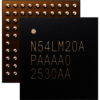
nRF54LM20A
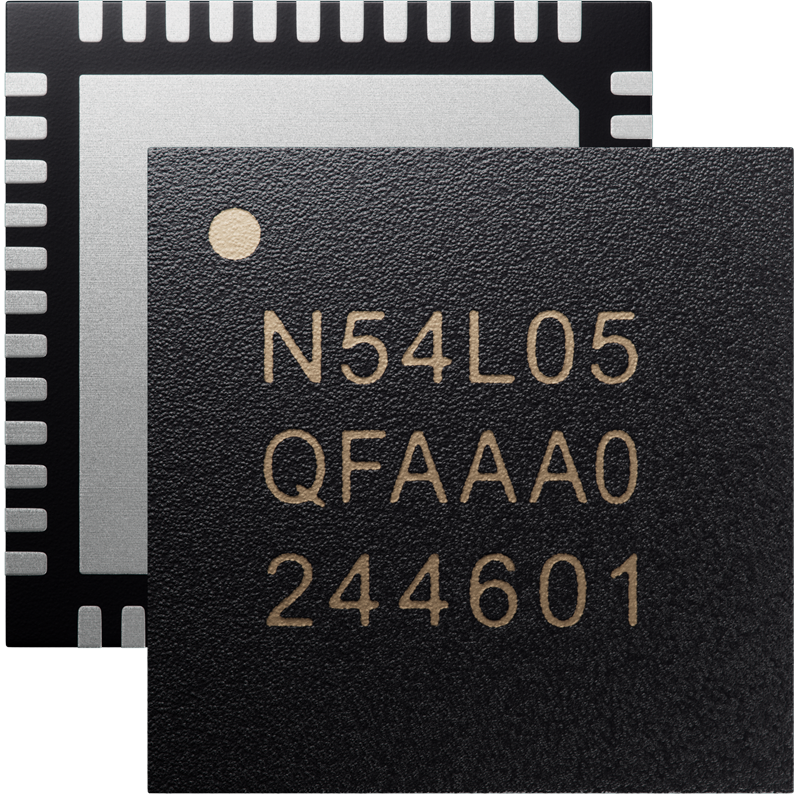
3.85 x 3.67 mm CSP98 66 GPIO
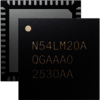
nRF54LM20A
6 x 6 mm QFN52 35 GPIO
Key features
- Ultra-low-power multiprotocol 2.4 GHz radio
- Integrated multi-purpose MCU functionality
- 128 MHz Arm Cortex-M33 processor
- 2 MB NVM and 512 KB RAM
- High-Speed USB
- Comprehensive set of peripherals, including new Global RTC available in System OFF, 14-bit ADC, and high-speed serial interfaces
- Secure boot, secure firmware update, secure storage
- Cryptographic accelerator with side-channel leakage protection, tamper detectors
Processing and architecture
- Main MCU: 128 MHz Arm Cortex‑M33.
- Coprocessor: 128 MHz RISC‑V, designed for time‑critical tasks, offloading the main core, and implementing low‑level or custom protocols, including emulated high‑throughput serial peripherals (“SoftPeripherals”) such as sQSPI.
- Core performance: 503 CoreMark, 3.93 CoreMark/MHz when executing from NVM.
The architecture includes multiple power domains and low‑leakage memory technologies, enabling very low current in idle and System OFF modes. A Global RTC can run in System OFF with current down to about 0.8 µA at 3.0 V, supporting ultra‑low‑power sleep and long battery lifetimes.
Memory and packages
- NVM: 2 MB nominal
- RAM: 512 KB
- GPIO: up to 66 configurable I/Os
- Packages: ultra‑compact CSP (3.85 × 3.67 mm) and 6 × 6 mm QFN.
The nRF54LM20A is the highest‑memory option in the nRF54L Series, which also includes nRF54L15, nRF54L10, and nRF54L05 with lower NVM/RAM configurations.
Wireless and protocol support
The SoC integrates Nordic’s fourth‑generation, ultra‑low‑power 2.4 GHz multiprotocol radio:
- Bluetooth LE, including advanced features and Bluetooth Channel Sounding from Bluetooth Core 6.0.
- Bluetooth Mesh and PAwR‑based use cases (e.g., ESL) via Bluetooth LE support in the series.
- IEEE 802.15.4‑2020 radio for Thread, Zigbee, and Matter over Thread.
- Proprietary 2.4 GHz modes with data rates up to 4 Mbps, enabling high‑throughput custom links.
- Ecosystem and protocol support via nRF Connect SDK across the nRF54L Series for Matter, Amazon Sidewalk, Google Find My Device (Google Find Hub), and Apple Find My, in addition to standard Bluetooth LE and 802.15.4‑based stacks.
The nRF54LM20A can also host the Wi‑Fi networking stack for nRF70 Series companion ICs (such as nRF7002), enabling full Wi‑Fi 6 applications with low power consumption. It uses hardware SPI plus sQSPI emulation on the RISC‑V SoftPeripherals for efficient high‑throughput communication. The architecture allows the Wi‑Fi companion to maintain AP association while the nRF54LM20A remains mostly in sleep, supporting very low‑power Wi‑Fi‑connected standby modes.
Peripherals and interfaces
The device includes a broad and modern peripheral set tailored to wireless MCUs:
- High‑speed USB (a distinguishing feature versus other nRF54L SoCs)
- Seven serial interfaces, including SPI, TWI (I²C‑compatible), UART, and high‑speed SPI (HS‑SPI)
- Extended peripherals and timers, including:
- Global RTC (operational in System OFF for ultra‑low‑power timekeeping)
- 14‑bit ADC (up to 2 MS/s, 8 channels for the series), enabling high‑resolution sensor measurements
- TDM and PDM interfaces (e.g., for audio)
- NFC interface
- PWM and QDEC (Quadrature Decoder) for motor/encoder or input devices
This rich peripheral set allows many end products to be implemented with a single chip, avoiding external MCUs or interface expanders.
Security
The nRF54LM20A provides a comprehensive security feature set designed to meet modern IoT requirements and regulations:
- Trusted execution environment via Arm TrustZone isolation
- Secure boot, secure firmware update, and secure storage capabilities across the series
- Cryptographic accelerator protected against side‑channel leakage
- Tamper detection mechanisms
- Physical and architectural protections intended to help meet stringent security standards
Development ecosystem
Development with the nRF54LM20A is supported by Nordic’s standard toolchain:
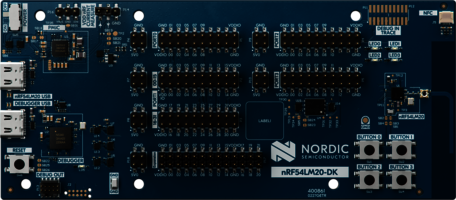
- nRF54LM20 DK: single‑board development kit exposing all key SoC features, including 2.4 GHz and NFC antennas, SWF RF connector, SEGGER J‑Link OB, user LEDs/buttons, current‑measurement points, 8 MB external flash, and dual virtual UARTs.
- nRF Connect SDK: provides protocol stacks (Bluetooth LE, Thread, Zigbee, Matter, Wi‑Fi with nRF70 Series, etc.), drivers, libraries, and sample applications for nRF54L Series devices.
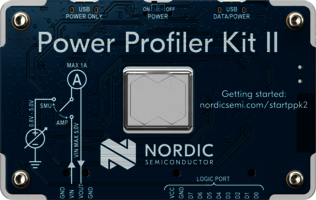
- Tools: nRF Connect for Desktop, nRF Connect for VS Code, and nRF Util for programming, debugging, and testing; plus the Power Profiler Kit II for power‑consumption measurements when used with the DK.
Nordic Developer Academy offers courses such as nRF54L Series Express, nRF Connect SDK Fundamentals, and Bluetooth LE Fundamentals, all of which support the nRF54L family and specifically the nRF54LM20A DK. For measuring and optimizing the power consumption, the Power Profiler Kit II is highly recommended as an easy-to-use, low cost and highly accurate measurement tool.
Getting started
nRF54LM20 Development Kit
Power Profiler Kit II
nRF54L Series Selection Guide
|
nRF54LM20A |
nRF54L15 |
nRF54L10 |
nRF54L05 |
|
|
|
|
|
|
|
|
Processor |
128 MHz Arm Cortex-M33 |
128 MHz Arm Cortex-M33 |
128 MHz Arm Cortex-M33 |
128 MHz Arm Cortex-M33 |
|
Coprocessor |
128 MHz FLPR |
128 MHz FLPR |
128 MHz FLPR |
128 MHz FLPR |
|
NVM |
2 MB |
1.5 MB |
1.0 MB |
0.5 MB |
|
RAM |
512 KB |
256 KB |
192 KB |
96 KB |
|
Bluetooth |
Bluetooth LE, Channel Sounding |
Bluetooth LE, Channel Sounding, Mesh |
Bluetooth LE, Channel Sounding, Mesh |
Bluetooth LE, Channel Sounding, Mesh |
|
Additional Protocols |
Zigbee, Thread, Matter, Aliro |
Zigbee, Thread, Matter, Aliro, Amazon Sidewalk |
Zigbee, Thread, Matter, Aliro, Amazon Sidewalk |
Zigbee, Thread |
|
TX Power |
Up to 8 dBm |
Up to 8 dBm |
Up to 7 dBm |
Up to 7 dBm |
|
RX Sensitivity |
-96 dBm |
-96 dBm |
-96 dBm |
-96 dBm |
|
Digital interfaces |
High-speed USB, High-speed SPI/UART, 6x SPI/UART/TWI, PDM, TDM, PWM, QDEC |
High-speed SPI/UART, 4x SPI/UART/TWI, PDM, I2S, PWM, QDEC |
High-speed SPI/UART, 4x SPI/UART/TWI, PDM, I2S, PWM, QDEC |
High-speed SPI/UART, 4x SPI/UART/TWI, PDM, I2S, PWM, QDEC |
|
Security |
Regulatory compliance (RED, CRA, PSTI) Crypto Engine, Tamper Detection, Side-Channel Protection, Trustzone |
Regulatory compliance (RED, CRA, PSTI) Crypto Engine, Tamper Detection, Side-Channel Protection, Trustzone |
Regulatory compliance (RED, CRA, PSTI) Crypto Engine, Tamper Detection, Side-Channel Protection, Trustzone |
Regulatory compliance (RED, CRA, PSTI) Crypto Engine, Tamper Detection, Side-Channel Protection, Trustzone |
|
Operating Temperatures |
-40 to +85ºC |
-40 to +105ºC |
-40 to +105ºC |
-40 to +105ºC |
|
Supply Voltage |
1.7 to 3.6 V |
1.7 to 3.6 V |
1.7 to 3.6 V |
1.7 to 3.6 V |
|
GPIOs |
Up to 66 |
Up to 35 |
Up to 35 |
Up to 35 |
|
Package Options |
3.9 x 3.7 mm CSP98 6 x 6 mm QFN52 |
2.4 x 2.2 mm CSP47 6 x 6 mm QFN52 6 x 6 mm QFN48 5 x 5 mm QFN40 |
6 x 6 mm QFN52 6 x 6 mm QFN48 5 x 5 mm QFN40 |
6 x 6 mm QFN52 6 x 6 mm QFN48 5 x 5 mm QFN40 |
Participate and Win!
How does the competition work?
You can win a Chipolo LOOP or CARD and a Nordic DevKit of your choice on behalf of your company.
To enter, select which Chipolo finder you would like to receive, as well as which Nordic boards you would like to win (you can select multiple options, and the lottery will decide which one you may win).
Fill out the form now and, with a little luck, you will receive the combination of your wishes:
Registration Form
Unfortunately, the competition has now ended. Discover the products in our shop and get in touch with our Nordic experts.
Learn more about the prizes

Nordic Semiconductor is a global leader of ultra-low-power wireless technologies and a long term partner of Rutronik and is offering you the opportunity to win one of their development hardware. Participate in our advent calendar and explore the world of Power Management, Short Range, Wi-Fi and Cellular.
nRF54L15-DK
The nRF54L15 DK (Development Kit) features the nRF54L15 wireless SoC (System-on-Chip) and can emulate the nRF54L10, and nRF54L05 wireless SoCs. The affordable DK makes all features available to the developer on a single board.
nRF54LM20-DK
The nRF54LM20-DK is a development kit for the nRF54LM20A wireless SoC supporting Bluetooth LE, Matter, Aliro, Thread, Zigbee, and 2.4 GHz proprietary protocols (up to 4 Mbps).
nPM1304-EK
The nPM1304 Evaluation Kit for the nPM1304, a highly sophisticated Power Management IC (PMIC) with battery charging and unique system management features such as accurate fuel gauge, watchdog & boot timer, ship & hibernate mode and much more.
nPM1300-EK
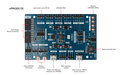
The nPM1300 Evaluation Kit (EK) is a hardware platform for evaluating and configuring the nPM1300 Power Management IC (PMIC) through code-free integration with the nPM PowerUP desktop app.
nPM2100-EK
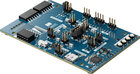
The nPM2100 Evaluation Kit (EK) is a hardware platform for evaluating and configuring the nPM2100 Power Management IC (PMIC) designed for non-rechargeable batteries, with seamless code-free configuration through the nPM PowerUP desktop app.
Power Profiler Kit 2
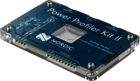
The Power Profiler Kit II (PPK2) is a standalone unit, which can measure and optionally supply currents all the way from sub-uA and as high as 1A on all Nordic DKs, in addition to external hardware.
nRF7002-DK
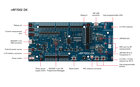
The nRF7002 DK is the development kit for the nRF7002, and nRF7001 Wi-Fi 6 Companion ICs. It contains everything needed to get started developing on a single board. The DK features an nRF5340 multiprotocol System-on-Chip (SoC) as a host processor for the nRF7002.
nRF9151-DK
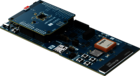
The nRF9151 DK is an affordable, pre-certified single board development kit for evaluation and development on the nRF9151 System-in-Package (SiP) for LTE-M, NB-IoT, GNSS and DECT NR+. It has a dedicated LTE-M, NB-IoT and DECT NR+ antenna that supports a wide range of bands to operate globally.
Thingy:91 X
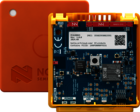
The Nordic Thingy:91 X is a battery-operated prototyping platform for cellular IoT based on the nRF9151 System-in-Package (SiP) supporting LTE-M, NB-IoT, GNSS and NR+, and certified for global operation. It is the ideal platform for rapidly developing a prototype for any cellular IoT concept, and is especially suited for asset-tracking applications. Nordic Thingy:91 X enables location tracking using cellular (MCELL and SCELL), Wi-Fi, or GNSS, in combination with nRF Cloud Location Services.

On top of this you have the chance to win a finder from our customer Chipolo. This product is a lightweight, water-resistant item finder designed to help you find your missing valuable items.

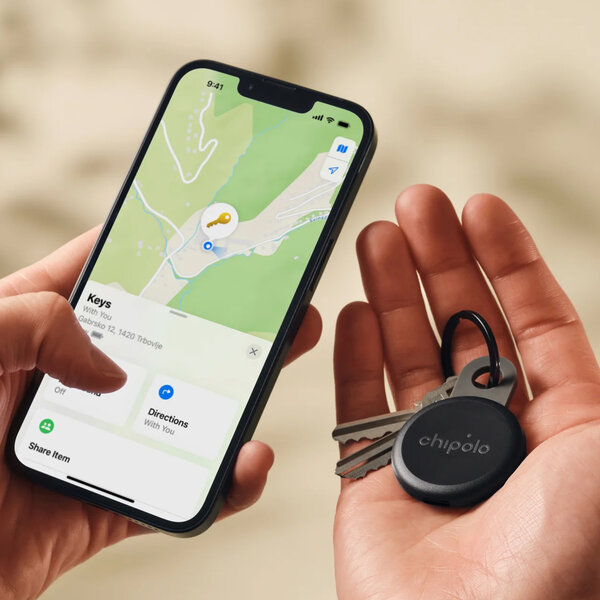

Chipolo LOOP
Rechargeable tracker with flexible silicone strap for easy attachment. Enjoy the freedom of universal compatibility with Apple “Find My” or Google “Find My Device.”
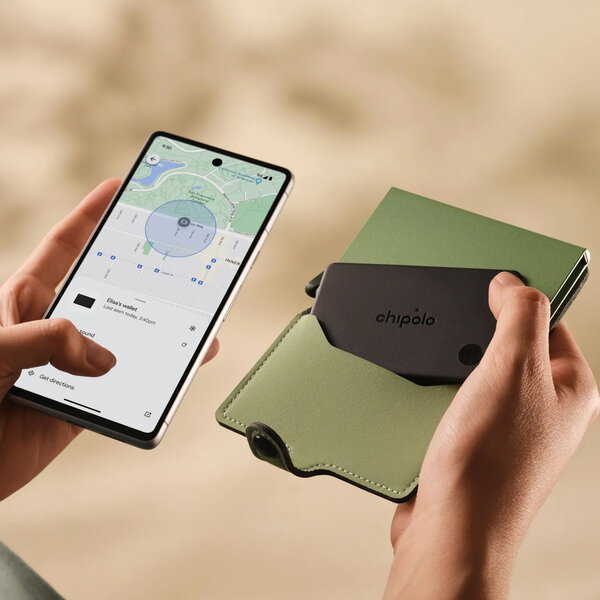
Chipolo CARD
Thin, rechargeable tracker that fits perfectly in your wallet. Discreetly slim yet impressively loud, CARD helps you keep track of your most important flat items. Universally compatible with Apple's “Find My” or Google's “Find My Device”.


If you haven't already, be sure to check out our social media channels!





Keep up to date with the RUTRONIK newsletter.
