


Door 23 – Matter

- Standardized application layer foundation for connected things
What is Matter?
Matter aims to make it easy for developers to create a secure and reliable solution. If you want your products to be interoperable with the major smart home ecosystems, Matter is the way to go. Matter, which began as Project CHIP (Connected Home over IP) started in December 2019. The starting companies were Amazon, Apple, Google, and others including Nordic Semiconductor. The goal is to agree on a unified application layer standard for connected things at home. Matter is using Thread, Wi-Fi + Ethernet for transport and Bluetooth LE + NFC for commissioning. All Matter devices based on Thread are required to feature Bluetooth LE concurrently to enable adding new devices to a network. Wi-Fi can be used for low and high bandwidth applications. It can be used for devices in range of the local Wi-Fi. Thread is an IPv6- based mesh protocol that targets low bandwidth applications. It is the go-to option for battery-powered devices that require the best energy efficiency and for simple actuators like smart plugs or light bulbs. Most mains-connected Thread devices work as a Thread router and will expand the network's range. Thread is a self-healing low-power mesh that can adapt to new devices or to devices being removed from the network.
Internet protocol
Matter provides a shared foundation on which to build an application. The goal is to have interoperability between devices and ecosystems. As the former project name suggests, it is based on the Internet Protocol (IP). The IP is the most common network layer used in homes and offices. This makes it ideal for delivering on interoperability and security to devices and services. Matter provides a standard application layer that is used with a set of wireless technologies. The focus is on Bluetooth LE, Thread, Wi-Fi and Ethernet. This will be followed by other IP-supporting protocols such as cellular.

Matter in Smart Home
With each Matter Release new applications from the Smart Home sector become available:
Matter 1.0 Release | Fall 2022
- Lighting (bulbs, switches, dimmers)
- HVAC (thermostats, air conditioners)
- Window Coverings (blinds, shades)
- Smart Plugs
- Door Locks
Matter 1.1 Release | Spring 2023
Quality improvements
Matter 1.2 Release | Autumn 2023
- Refrigerators
- Room Air Conditioners
- Dishwashers / Laundry Washers
- Robotic Vacuums
- Air Quality Sensors
- Smoke Detectors
Matter 1.4 Release | Summer 2025
Performance & security improvements
Matter 1.5 Release | Winter 2025 (new)
- Cameras (Security, Doorbell, Monitoring)
- Closures (Garage Doors, Gates)
- Soil Sensors (for Gardening, Agriculture)
- Enhanced Energy Management Capabilities
Communication
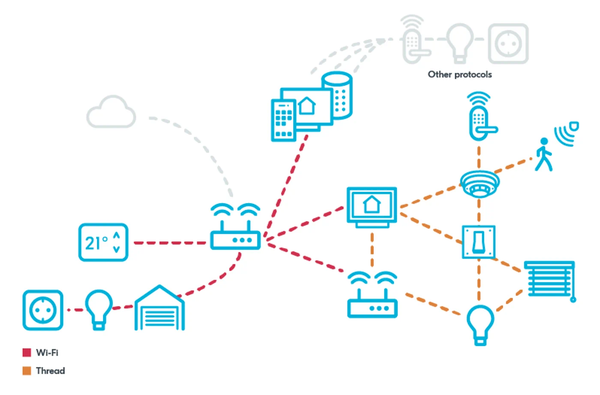
Matter is using Thread, Wi-Fi, and Ethernet for transport and Bluetooth LE and NFC for commissioning. All Matter devices based on Thread are required to feature Bluetooth LE concurrently to enable adding new devices to a network. Wi-Fi can be used for high bandwidth applications. It can be used for devices in range of the local Wi-Fi. Thread is an IPv6-based mesh protocol that targets low bandwidth applications. It is the go-to option for battery-powered devices that require the best energy efficiency and for simple actuators like smart plugs or light bulbs. Most mains-connected Thread devices work as a Thread router and will expand the network's range. Thread is a self-healing low-power mesh that can adapt to new devices or to devices being removed from the network.
Getting started
To get started developing your matter product right, you can use the nRF54LM20 DK, nRF5340 DK or nRF7002 DK. When using these kits, all the SoCs functions can be used and tested. All analog and digital interfaces, and GPIOs are available via headers and edge connectors. An onboard SEGGER J-Link enables programming, debugging, and even RTOS awareness during debugging. Both kits are Arduino Uno Rev3 hardware compatible, so they can interface with device shields. The Power Profiler Kit II (PPK2) is a standalone Kit used to supply and measure currents from sub µA up to 1A. The dedicated current measurement pins on our DKs can be used to connect DKs to a PPK2. The PPK2 can even use digital inputs and work as a low-end logic analyzer, enabling code-synchronized measurements.
nRF54LM20 Development Kit
nRF5340 Development Kit
nRF7002 Development Kit
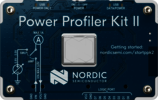
Power Profiler Kit II
Participate and Win!
How does the competition work?
You can win a Chipolo LOOP or CARD and a Nordic DevKit of your choice on behalf of your company.
To enter, select which Chipolo finder you would like to receive, as well as which Nordic boards you would like to win (you can select multiple options, and the lottery will decide which one you may win).
Fill out the form now and, with a little luck, you will receive the combination of your wishes:
Registration Form
Unfortunately, the competition has now ended. Discover the products in our shop and get in touch with our Nordic experts.
Learn more about the prizes

Nordic Semiconductor is a global leader of ultra-low-power wireless technologies and a long term partner of Rutronik and is offering you the opportunity to win one of their development hardware. Participate in our advent calendar and explore the world of Power Management, Short Range, Wi-Fi and Cellular.
nRF54L15-DK
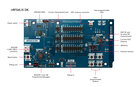
The nRF54L15 DK (Development Kit) features the nRF54L15 wireless SoC (System-on-Chip) and can emulate the nRF54L10, and nRF54L05 wireless SoCs. The affordable DK makes all features available to the developer on a single board.
nRF54LM20-DK
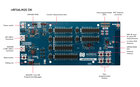
The nRF54LM20-DK is a development kit for the nRF54LM20A wireless SoC supporting Bluetooth LE, Matter, Aliro, Thread, Zigbee, and 2.4 GHz proprietary protocols (up to 4 Mbps).
nPM1304-EK
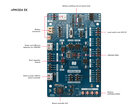
The nPM1304 Evaluation Kit for the nPM1304, a highly sophisticated Power Management IC (PMIC) with battery charging and unique system management features such as accurate fuel gauge, watchdog & boot timer, ship & hibernate mode and much more.
nPM1300-EK
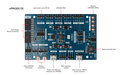
The nPM1300 Evaluation Kit (EK) is a hardware platform for evaluating and configuring the nPM1300 Power Management IC (PMIC) through code-free integration with the nPM PowerUP desktop app.
nPM2100-EK
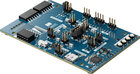
The nPM2100 Evaluation Kit (EK) is a hardware platform for evaluating and configuring the nPM2100 Power Management IC (PMIC) designed for non-rechargeable batteries, with seamless code-free configuration through the nPM PowerUP desktop app.
Power Profiler Kit 2
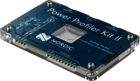
The Power Profiler Kit II (PPK2) is a standalone unit, which can measure and optionally supply currents all the way from sub-uA and as high as 1A on all Nordic DKs, in addition to external hardware.
nRF7002-DK
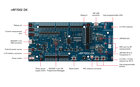
The nRF7002 DK is the development kit for the nRF7002, and nRF7001 Wi-Fi 6 Companion ICs. It contains everything needed to get started developing on a single board. The DK features an nRF5340 multiprotocol System-on-Chip (SoC) as a host processor for the nRF7002.
nRF9151-DK
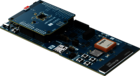
The nRF9151 DK is an affordable, pre-certified single board development kit for evaluation and development on the nRF9151 System-in-Package (SiP) for LTE-M, NB-IoT, GNSS and DECT NR+. It has a dedicated LTE-M, NB-IoT and DECT NR+ antenna that supports a wide range of bands to operate globally.
Thingy:91 X
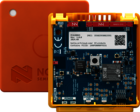
The Nordic Thingy:91 X is a battery-operated prototyping platform for cellular IoT based on the nRF9151 System-in-Package (SiP) supporting LTE-M, NB-IoT, GNSS and NR+, and certified for global operation. It is the ideal platform for rapidly developing a prototype for any cellular IoT concept, and is especially suited for asset-tracking applications. Nordic Thingy:91 X enables location tracking using cellular (MCELL and SCELL), Wi-Fi, or GNSS, in combination with nRF Cloud Location Services.

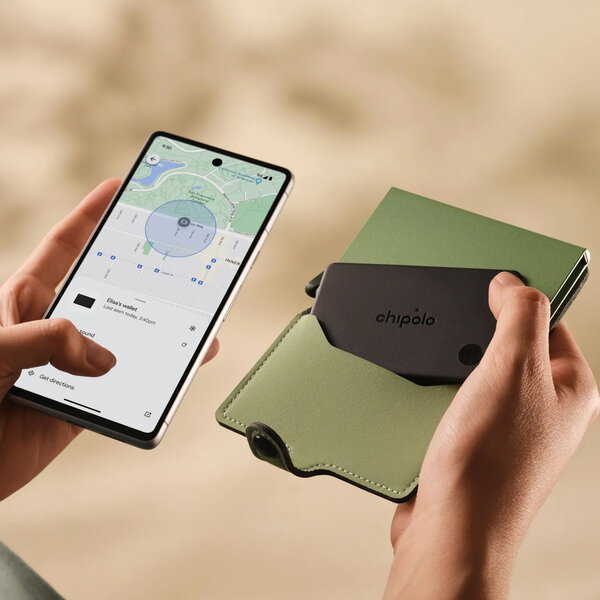
On top of this you have the chance to win a finder from our customer Chipolo. This product is a lightweight, water-resistant item finder designed to help you find your missing valuable items.

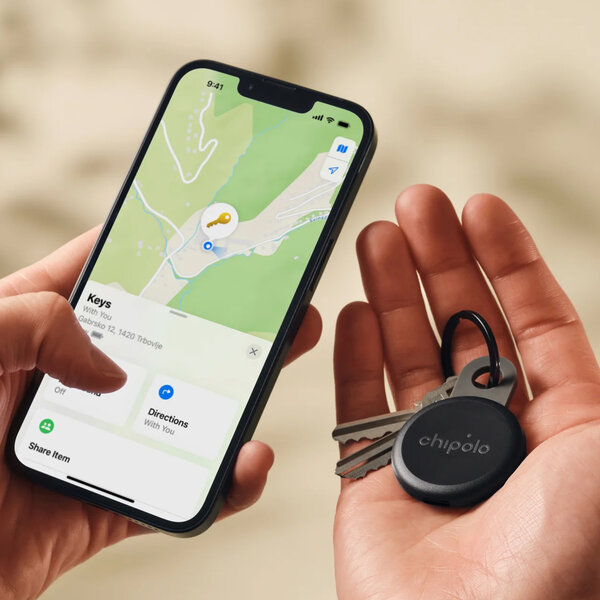

Chipolo LOOP
Rechargeable tracker with flexible silicone strap for easy attachment. Enjoy the freedom of universal compatibility with Apple “Find My” or Google “Find My Device.”
Chipolo CARD
Thin, rechargeable tracker that fits perfectly in your wallet. Discreetly slim yet impressively loud, CARD helps you keep track of your most important flat items. Universally compatible with Apple's “Find My” or Google's “Find My Device”.


If you haven't already, be sure to check out our social media channels!




Keep up to date with the RUTRONIK newsletter.
