
Low-Capacity NAND Is Disappearing. Your Deployed Designs Don’t.
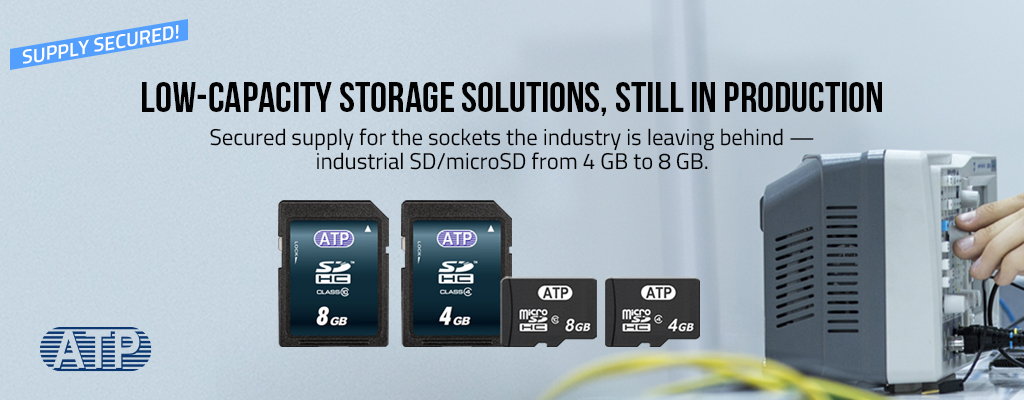
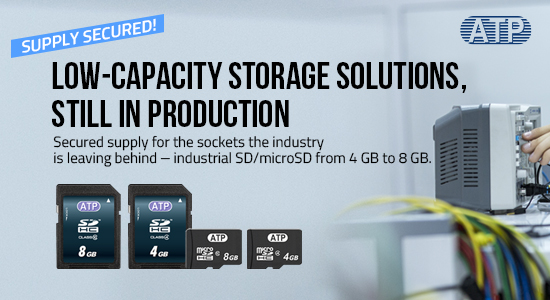
Low-capacity industrial storage is quietly disappearing as NAND makers retire legacy nodes. ATP has secured 2D MLC supply to keep 4 GB–8 GB SD and microSD in production — so deployed, qualified designs don't have to be redesigned.
Low-Capacity NAND Is Going Away. ATP Has Secured the Supply.
As NAND manufacturers continue shifting production toward higher-density technologies, legacy 2D MLC and low-density NAND devices are becoming increasingly difficult to source. For long-life industrial systems, the challenge is often not performance but availability. To address this industry transition, ATP has secured 2D MLC NAND supply to continue manufacturing 4 GB and 8 GB SD and microSD products, helping customers maintain low-capacity storage designs without being forced into higher-capacity alternatives or unnecessary redesigns.
Keep Validated Systems Running Beyond EOL.
For industrial, energy, and transportation applications, the cost of replacing a discontinued storage device extends far beyond the component itself. The cost of a 4 GB SD card may be trivial, but the cost of changing it is not.
Qualified storage configurations are often tied to validation data, endurance projections, firmware behavior, temperature testing, and even regulatory certifications. When a storage device changes, some or all of that qualification work may need to be repeated. For deployed systems, requalification effort, engineering resources, and lifecycle management costs can quickly exceed the value of the component being replaced.
The real impact of an EOL event is not the price of replacement storage, but the cascade of redesign, revalidation, and support activities it can trigger across systems that were intended to remain stable for years.
Maintain the Right Capacity. Avoid Oversizing Costs.
A common response to a low-capacity product EOL is selecting the smallest higher-capacity device still available on the market. While this may appear to be the simplest solution, larger-capacity replacements often introduce different NAND technologies, controller architectures, endurance characteristics, operating specifications, and temperature ratings.
From the host system's perspective, it can effectively become a new storage device. As a result, customers may end up paying for capacity the application never uses while still facing the qualification work they were trying to avoid.
For applications that only require a few gigabytes of storage, maintaining the original capacity range is often the more practical approach. It helps preserve design continuity, reduce qualification effort, and better align storage capacity with actual application requirements.
|
Form factor |
Product line |
NAND type |
Capacities |
Operating temperature |
|---|---|---|---|---|
|
SD/microSD |
S600Sc |
2D MLC |
4 GB / 8 GB |
−25°C to 85°C |
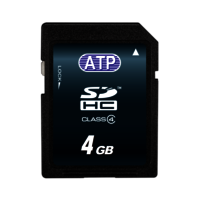
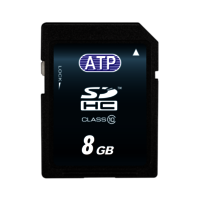
ATP Low-Capacity Storage Solutions Flyer
Specifications & description of the relaunched family.
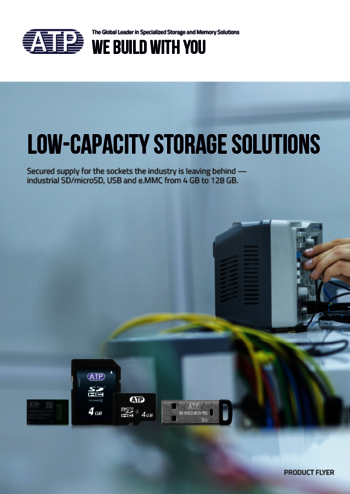
Low-Capacity NAND Is Disappearing. Your Deployed Designs Don’t.
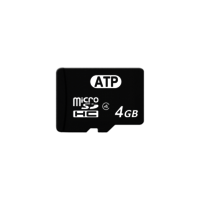
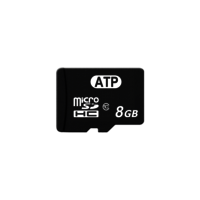
ATP 4 GB and 8 GB 2D MLC SD and microSD storage solutions are designed for like-for-like replacement in legacy systems. Secure low-capacity NAND supply for legacy designs. Minimize redesign, requalification, and unnecessary oversizing costs.